Imagine waking up one day and realizing that the money you invested years ago has grown while you were sleeping.
That is one of the most powerful ideas behind investing.
Whether you earn a salary, run a business, or simply have some savings sitting in a bank account, investing can give your money an opportunity to grow over time. But investing isn’t a get-rich-quick scheme. It is a long-term strategy that involves putting money into assets or opportunities that you believe can increase in value or generate income.
So, what exactly is investing, and how does it work?
What Is Investing?
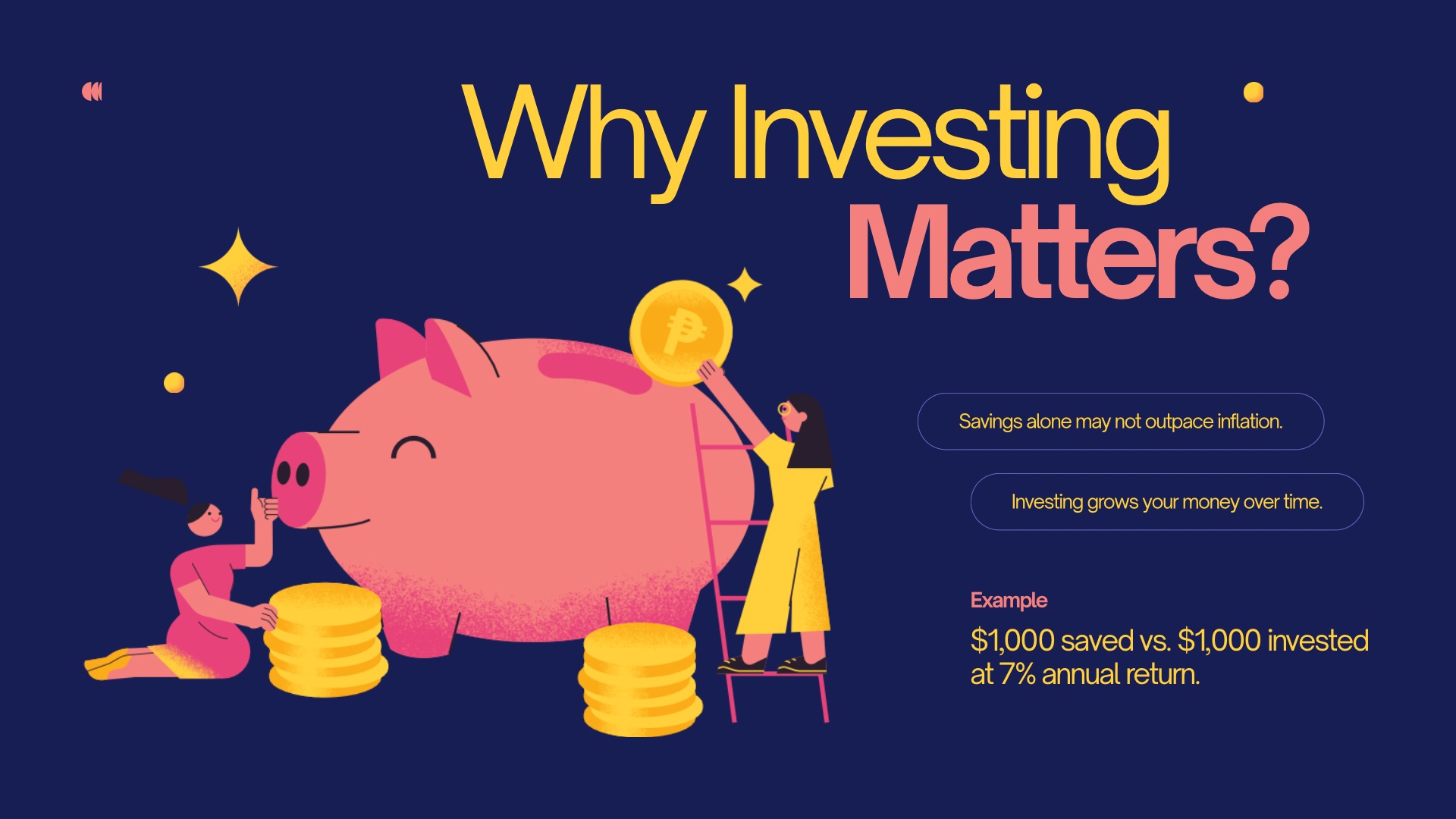
Investing means putting your money into something with the expectation that it will generate a return in the future.
Instead of simply keeping your money unused, you put it to work.
For example, you could invest in:
Stocks and shares
Bonds
Real estate
Mutual funds
Exchange-traded funds (ETFs)
Businesses
Government securities
Other income-generating assets
The goal is simple: use money today to potentially create more money tomorrow.
However, every investment comes with some level of risk. Generally, investments with the potential for higher returns can also come with greater risk.
Saving vs. Investing: What’s the Difference?
Saving and investing are often confused, but they serve different purposes.
Saving usually means keeping money somewhere relatively safe and accessible, such as a savings account. It is often used for short-term goals and emergencies.
Investing, on the other hand, involves putting money into assets that have the potential to grow or produce income over a longer period.
Think of it this way:
Saving protects your money. Investing gives your money an opportunity to grow.
Ideally, you may want to have both.
How Does Investing Actually Work?
The basic process is easier to understand than it may seem.
Let’s say you have $100 that you don’t need immediately.
Instead of leaving all of it unused, you decide to invest it in an asset.
If that asset increases in value, your investment could become worth more than $100. Some investments may also pay you income, such as dividends or interest.
For example, if you invest $100 and the investment eventually grows by 10%, it would be worth approximately $110 before considering fees, taxes, and other factors.
If you continue investing and allow your returns to remain invested, you can potentially benefit from compound growth.
What Is Compound Interest?
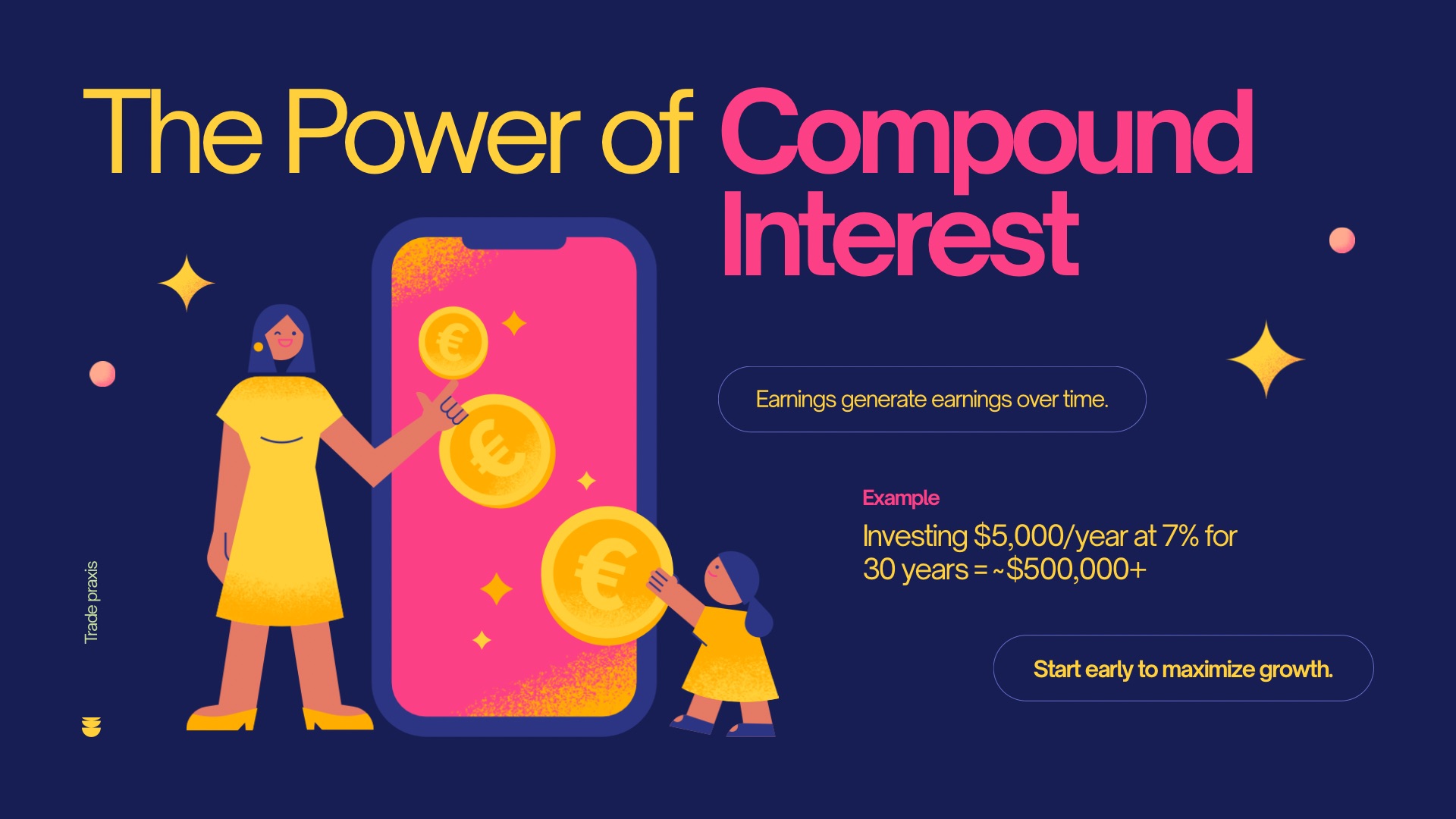
Compound growth is one of the most important concepts every new investor should understand.
It essentially means that your investment can earn returns, and those returns can then generate additional returns.
Imagine planting a tree.
At first, the tree is small. But with time, it grows branches, produces more leaves, and becomes much larger.
Investing can work in a similar way.
The longer your money remains invested and the more consistently you contribute, the greater the potential for growth.
This is why starting early can be extremely valuable.
What Can You Invest In?
There isn’t one investment that is perfect for everyone. Different assets have different levels of risk, potential returns, and time horizons.
1. Stocks
When you buy shares of a company, you are purchasing a small ownership stake in that business.
If the company performs well and its share price increases, your investment may increase in value. Some companies also pay dividends to shareholders.
2. Bonds
Bonds are essentially loans made by investors to governments, companies, or other organizations.
In return, the investor may receive interest according to the terms of the bond and eventually receive the principal back, assuming the issuer meets its obligations.
3. Real Estate
Real estate investing involves purchasing property or gaining exposure to property with the goal of generating income or benefiting from appreciation.
This can include residential property, commercial property, land, or real estate investment trusts (REITs).
4. Mutual Funds and ETFs
These investment vehicles can pool money from many investors and use it to invest in a collection of assets.
Instead of buying individual investments yourself, you can gain exposure to a broader portfolio through one fund.
Why Do People Invest?
People invest for different reasons.
Some want to build wealth. Others want to generate additional income, prepare for retirement, protect their purchasing power, or achieve a specific financial goal.
Common reasons include:
Building long-term wealth
Preparing for retirement
Generating passive income
Funding future goals
Protecting against inflation
Creating financial independence
The important thing is to understand why you are investing before deciding what to invest in.
Is Investing Risky?
Yes.
This is one of the most important facts beginners need to understand.
Investments can lose value. A stock can fall. A property can decline in value. A business can fail. Even investments traditionally considered lower-risk can carry risks.
That’s why you should never invest money you cannot afford to lose without first understanding the potential risks.
One common strategy for managing risk is diversification—spreading your money across different investments rather than putting everything into one asset.
As the saying goes, don’t put all your eggs in one basket.
How Much Money Do You Need to Start Investing?
You don’t necessarily need thousands of dollars to begin.
Depending on the investment and platform available to you, you may be able to start with a relatively small amount.
For example, you could begin with $50, $100, $500, or another amount that fits your financial situation.
The more important question isn’t always:
“How much money do I have?”
It can be:
“How consistently can I invest?”
Someone who invests a manageable amount regularly for many years may potentially build greater wealth than someone who makes one large investment and never invests again.
Consistency and time can be powerful.
Should a Beginner Use an Investment Consultant?
If you’re completely new to investing, you don’t have to figure everything out alone.
An investment consultant or qualified financial professional can help you understand your options and develop an investment approach based on factors such as your financial goals, time horizon, income, and tolerance for risk.
A consultant may help you:
Understand different investment options
Identify your financial goals
Assess your risk tolerance
Build a diversified investment strategy
Understand potential risks and fees
Avoid common beginner mistakes
Review and adjust your investment strategy over time
However, it’s important to choose a professional carefully. Look for someone appropriately qualified and, where applicable, properly licensed or regulated in your country.
Also remember that a consultant can provide guidance, but no legitimate professional can guarantee that an investment will make you money.
Be particularly cautious of anyone promising guaranteed profits, extremely high returns, or “risk-free” investments.
Common Investment Mistakes Beginners Should Avoid
Before investing, be aware of some common mistakes.
Investing without understanding what you’re buying: Never put your money into an investment simply because someone says it will make you rich.
Chasing quick profits: Investments promising guaranteed or unbelievably high returns deserve serious caution.
Putting everything into one investment: Concentrating your entire portfolio in one asset can expose you to significant losses.
Investing money you need immediately: Investments can fluctuate, so money needed for urgent expenses generally shouldn’t be treated the same way as long-term investment capital.
Making emotional decisions: Selling because everyone is panicking or buying because everyone is excited can lead to poor decisions.
Refusing to ask for professional help: If you’re confused about investing, getting guidance from a qualified consultant can help you understand your choices before committing your money.
The Biggest Secret of Investing: Time
Perhaps one of the most powerful advantages an investor can have isn’t a huge salary.
It’s time.
Investing is generally a long-term game. Markets can rise and fall, and individual investments can experience periods of poor performance.
Trying to predict every market movement can be extremely difficult.
Instead, many long-term investors focus on having a sensible strategy, controlling costs, diversifying appropriately, and staying disciplined.
Final Thoughts
Investing is essentially about putting your money to work for your future.
It can help you build wealth, generate income, and work toward long-term financial goals—but it isn’t guaranteed, and there are always risks involved.
You don’t have to know everything before you begin learning. Start by understanding the basics, determine your goals, learn about risk, and never invest simply because of hype or promises of easy money.
And if you’re unsure about where to start, speaking with a qualified investment consultant can be a valuable first step. The right professional can help you understand your options and make decisions that are appropriate for your circumstances.
Your future financial position can be influenced by the decisions you make with your money today.
The earlier you understand investing, the better prepared you may be to make informed financial decisions tomorrow.